
Contact
We're here to answer any questions you may have about the Isuwa Khola Hydropower Project.
Our Contact Information
-
Our Address
-
Phone & Email
-
Opening Hours
Sunday – Friday: 10:00 AM – 5:00 PM
Saturday: Closed
-
Project Site
Isuwa Khola Hydropower Project, Makalu Rural Municipality, Sankhuwasabha, Koshi Province
View area on map
Have Any Questions?
Get in Touch with Us
FAQs
Have Any Questions?
Can't find the answer you're looking for?
Send us a message01What is the Isuwa Khola Hydropower Project?
The Isuwa Khola Hydropower Project is a 97.2 MW Peaking Run-of-River (PRoR) scheme located in the Makalu Rural Municipality of Sankhuwasabha District, Koshi Zone, Eastern Region of Nepal. It is designed to contribute significantly to Nepal's national electricity network.
02Who is developing the project?
The project is developed by K.B.N.R Isuwa Power Limited.
03What is the installed capacity of the project?
The project has an installed capacity of 97.2 MW.
04How much energy will the project generate annually?
The project aims to supply 674.30 GWh of annual energy to the Nepal electricity network.
05What is the current overall progress of the construction?
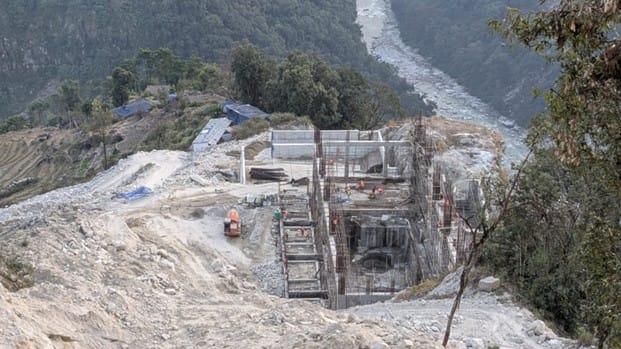
As of June 2026, overall civil works progress stands at 74%, with hydro-mechanical and electro-mechanical works each at 65%, transmission line works at 20%, and the access road fully complete.
06When is the project expected to be commercially operational?
The Proposed Extended Commercial Operation Date (RCOD) for the project is February 13, 2027. The original Commercial Operation Date (COD) as per the Power Purchase Agreement (PPA) was October 13, 2024.
07What are some of the major civil works components of the project?
Key civil works include a raised weir (50m x 37m), a side intake with two orifices, a 6911.53m long headrace pipe, a circular surge tank, a 2500m long penstock, and a surface powerhouse (115m x 20m).
08How is the project contributing to local communities?
The project undertakes various social and community support works, including road excavation (e.g., Thange-Bhanjyang School road), gabion works for protection, financial assistance for community structures (e.g., Yangluwa Gangdhok Gumba), and material assistance for drinking water supply at Jimmy Village.